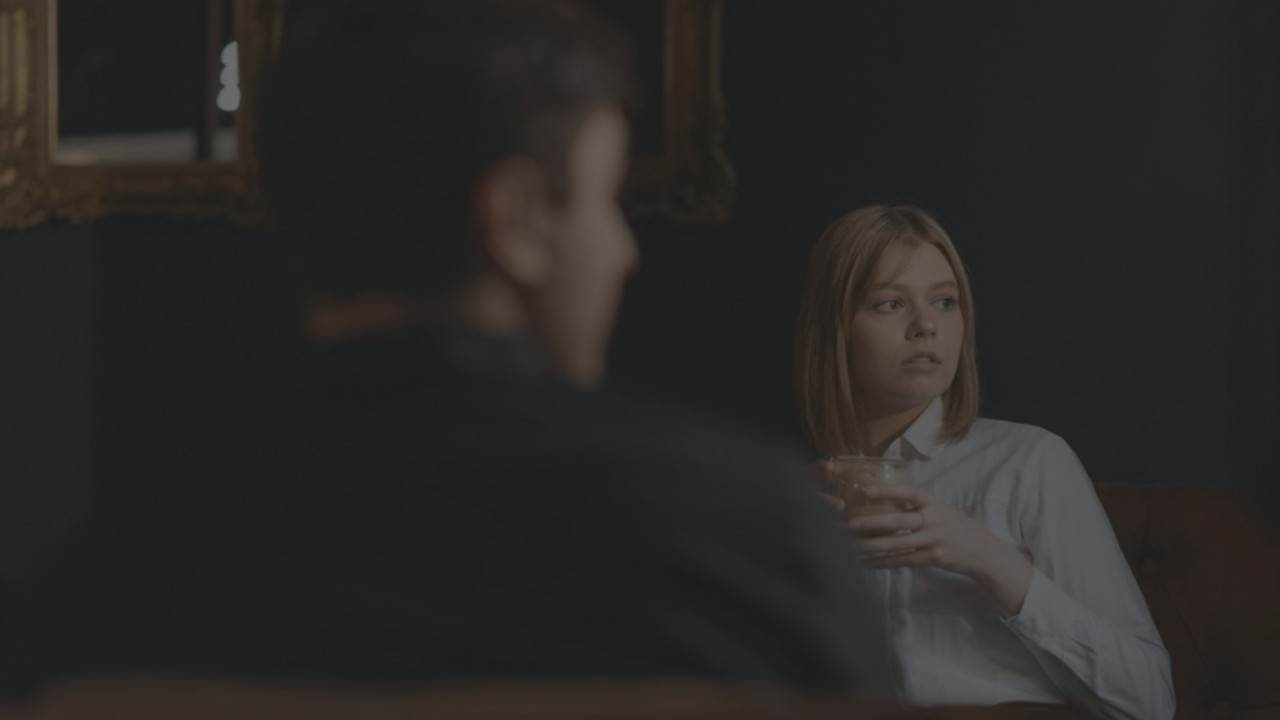
If you have anxious attachment, slowing down can feel like the LAST thing you want to do.
Part of that is because when you slow down… the feelings catch up with you.
It’s also easier for folks with anxious attachment to focus on what’s not going well, to get hyper-focused on what happened in the past or worried about the future, and to take longer to calm down after an upset.
That’s exactly why mindfulness and meditation help. Not as a way to make the feelings go away, but as a way to ground you in the here and now, so your nervous system gets a chance to settle.
These are the practices I teach in my program for anxious attachment. You don’t need any experience. You just need a few minutes.

Why mindfulness helps anxious attachment:
When you’re anxiously attached, you can get wound up by not having enough support. Your nervous system is scanning, bracing, waiting for the next disconnection.
Mindfulness gives you a larger container for those feelings. Instead of the feeling being the whole world, it becomes something you’re with.
Over time, practicing this brings a baseline of okayness into your life. And from that place it’s a lot easier to receive love (which is a BIG part of the healing).
1. A simple body scan:
No matter how much work you’ve done on yourself, this simple practice can go a long way.
- Start by breathing deeply. Don’t worry about changing your breath too much. Just focus on it going in and out.
- I like to imagine watching the inhale and exhale like the waves of the ocean. Even the sound of it can be like waves moving in and out.
- Notice if there’s any tension in your body. Let it be there, and breathe into it.
- If the tension were a shape, what shape would it be? Breathe into that shape.
- If it had a color, what color would it be?
- Come BACK to watching your breath, in and out.
Then notice how you feel now compared to before. It could be the same, or different. Both are okay.
Let yourself breathe like the waves of the ocean… in and out.
2. Being present with what’s around you:
This one is helpful when emotions are overwhelming and you need to feel a larger container around you. You can do it outside, or just in the room you’re in.
- Notice the light. What’s the quality of it? Are there any shadows?
- Find something you like about your environment. It could be the way it makes you feel, or something about how it looks.
- If it’s hard to find something you like, keep trying… (or find something you feel neutral about).
- *Pause* there. Breathe like the waves of the ocean and let the environment feed your senses.
Give yourself one minute. That’s it.

3. A partner meditation:
This is essentially mindfulness practice, with someone in front of you. It can be a romantic partner or anyone in your life. (You don’t even have to tell them you’re doing it.)
The purpose is to practice being with a person without changing or fixing anything. For anxious attachment, that’s huge.
- Scan your body and notice what’s happening in you as you’re with them. Breathe into it.
- Bring your attention out to them. Soften your eyes and take them in gently.
- Notice their facial expressions. Notice what they might be feeling.
- If thoughts or feelings come up, acknowledge them internally, then come back to your breath and the person in front of you.
The more you do this, the more you can really be with people without being in your head. You’ll feel more appreciation for them… and they’ll feel you really being with them.

4. Your peaceful place:
Bring to mind a place where you feel calm and safe. It can be real or imagined.
Picture it. Breathe it in for a minute. You can also do the butterfly hug while you picture it: cross your arms over your chest and gently tap one side, then the other.
Being present in your peaceful place soothes your nervous system. It also lets you take in the medicine of that place. Don’t stress about doing it right. It’s meant to bring you peace.
5. Light streaming:
At one point when I was really struggling with my anxious attachment, a wise friend told me about an exercise. Every day, you imagine yourself surrounded by light, and you imagine the light supporting you with anything you need help with.
She swore that if you did it for 30 minutes a day for a month, your whole life could change.
I did my own version. Sometimes just five minutes, sometimes longer. And I noticed something really powerful in taking time to let myself receive it. It contradicted a very old belief of mine that I didn’t have enough help.
A few months later, I met my partner. (I’m not promising that this practice will do that for you!) I do think that for those of us with anxious attachment, feeling supported changes everything.
I later learned that EMDR has something very similar, also called light streaming.
To try it:
- Imagine light streaming onto your body, in whatever color feels good to you.
- Let the light help you with whatever you need right now.
- Add the butterfly hug if you like, tapping while you picture the light.

How often should you practice?
Repetition helps. As a kid you had the same experiences thousands of times, so it’s really in your nervous system. A few minutes most days will do more than an hour once in a while.
Pick ONE of these to start. You can always add more.
Not sure what your attachment style is?
Join the 22,000+ people who have already taken it.
If you want to understand why calming your nervous system matters more than understanding your pattern, I teach it in my free training, Attachment Essentials. It also gives you access to my free community.
With love,
Sefora